Steppe Eagle Global Action Plan
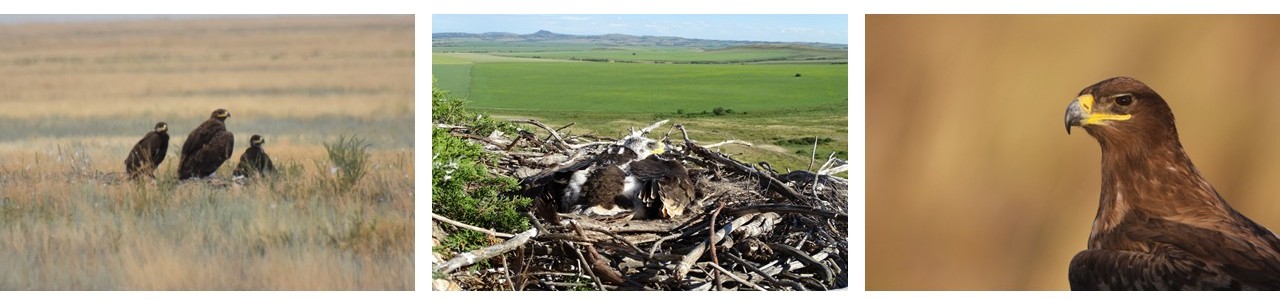
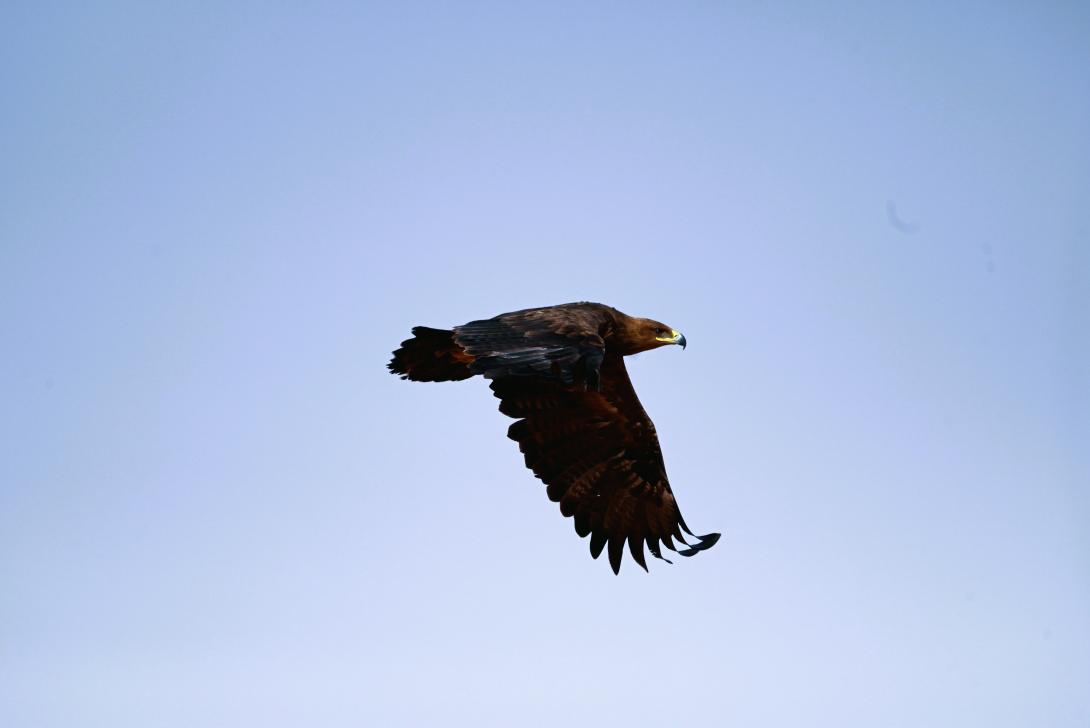
Steppe eagle (Aquila nipalensis) @ Bilal Kaber Ahmed - ITBA
The steppe eagle
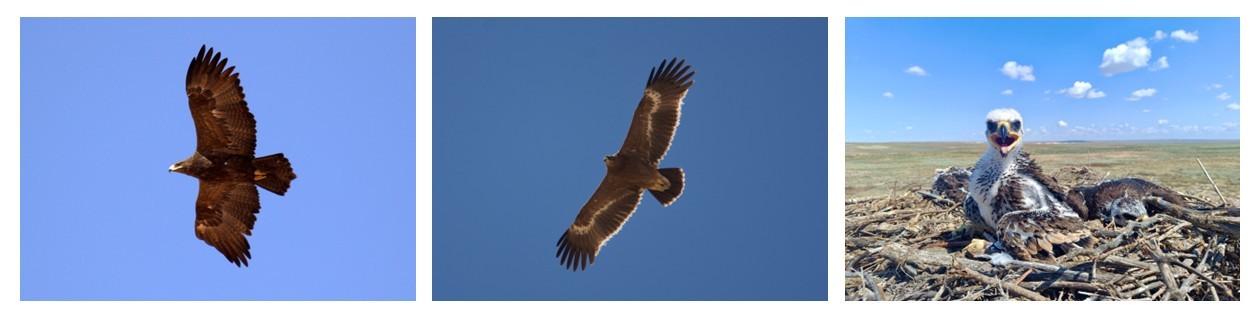
The steppe eagle (Aquila nipalensis) is a large, powerful raptor distinguished by its broad wings, relatively long and slightly rounded tail, and characteristic pale nape in many adult individuals. Females are markedly larger than males, often by more than 10%, a common feature among Accipitridae. Juveniles show a more contrasted and patterned plumage, whereas adults appear darker overall, with subtle variations across the species’ wide range. The species takes its name from the vast steppe landscapes where it breeds.
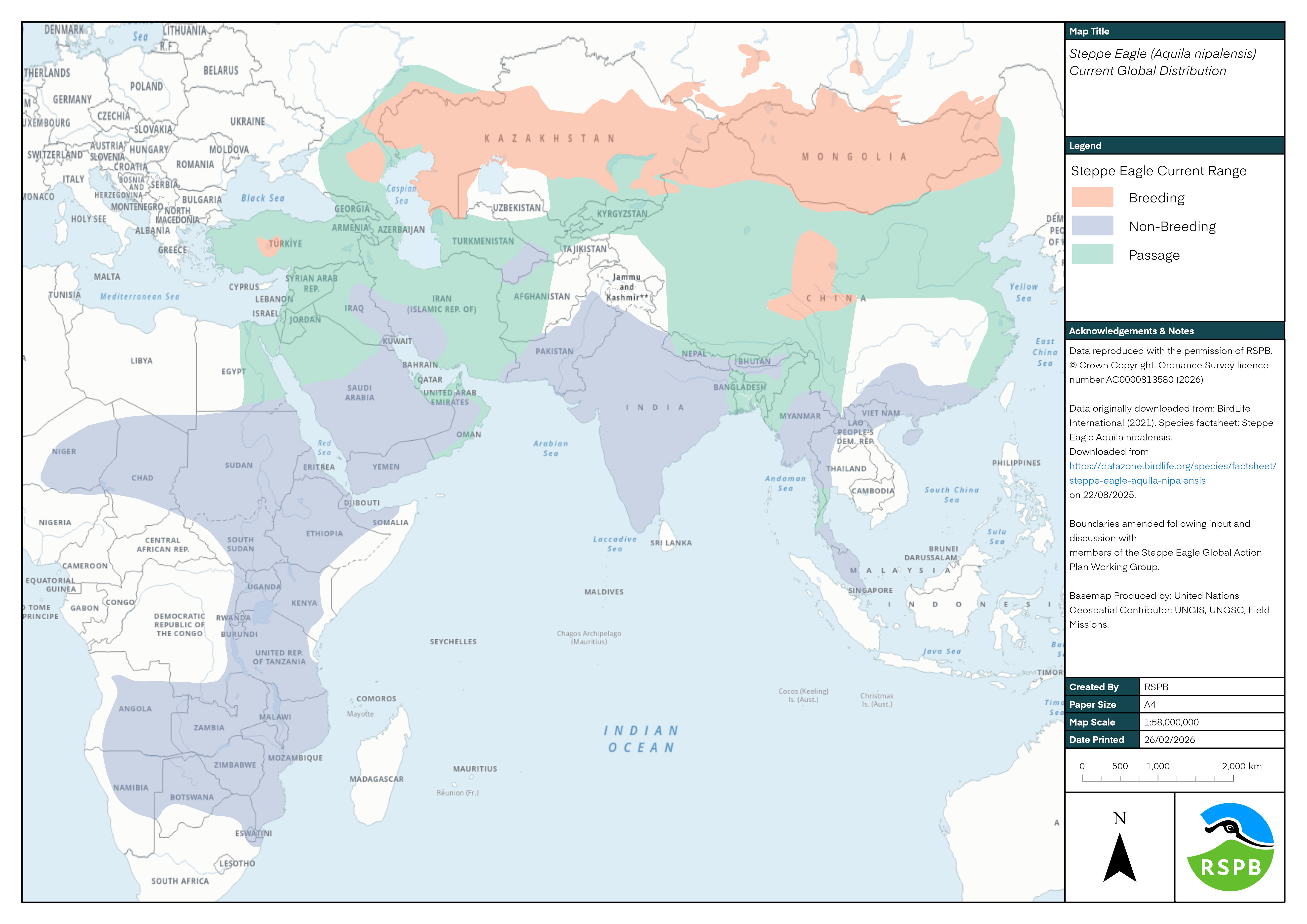
Steppe eagles are long-distance migrants, undertaking transcontinental journeys between their breeding grounds in the Palearctic and their wintering grounds in Africa, the Arabian Peninsula, the Indian subcontinent and parts of Central Asia. They breed predominantly in open steppe habitats, semi-deserts, and montane grasslands across a broad but increasingly fragmented range that includes Kazakhstan, Mongolia, Russia, China and adjacent regions.
The steppe eagle is also a flagship species for the Central Asian Flyway (CAF), highlighted in Resolution 14.13. The CAF serves as an important platform for bringing countries together to improve cooperation on migratory bird conservation across the region.
Work under CMS and the Raptors MOU
The steppe eagle is protected under CMS Appendices I and II and is listed as a Category 1 species under the Raptors MOU. Its populations are declining rapidly across much of its range, and the species is now considered Endangered on the IUCN Red List.
Because of these alarming declines, the Technical Advisory Group to the Raptors MOU has named the creation of a Global Action Plan for the steppe eagle as a top priority to help turn its conservation status around.
At CMS COP14 in February 2024, countries highlighted the urgent need for stronger international cooperation to save the species. CMS Resolution 12.12 (Rev.COP14) called for a dedicated Action Plan for birds, while Decision 14.145 encouraged governments, NGOs and other partners to work quickly so that a Single Species Action Plan for the steppe eagle could be adopted at CMS COP15.
To help meet this goal, the Raptors MOU Coordinating Unit, working closely with the Royal Society for the Protection of Birds (RSPB, UK), has developed the Global Action Plan for the steppe eagle. This work was supported by the Earthshot Prize.
A core working group of experts from across the species’ range was established. A call for experts and a questionnaire were sent to all CMS Parties and Raptors MOU Signatories on 8 April 2025.
Additional experts met in Astana, Kazakhstan, in May 2025 to map threats and developed shared Goals, Objectives and Actions to shape the Global Action Plan. These components have been the core around which the Global Action Plan has been developed.
The Global Action Plan for the steppe eagle was recommended for adoption by the CMS Scientific Committee at its 8th Sessional Committee Meeting in December 2025 and endorsed by CMS Parties at 15th Conference of the Parties (COP15) in March 2026.
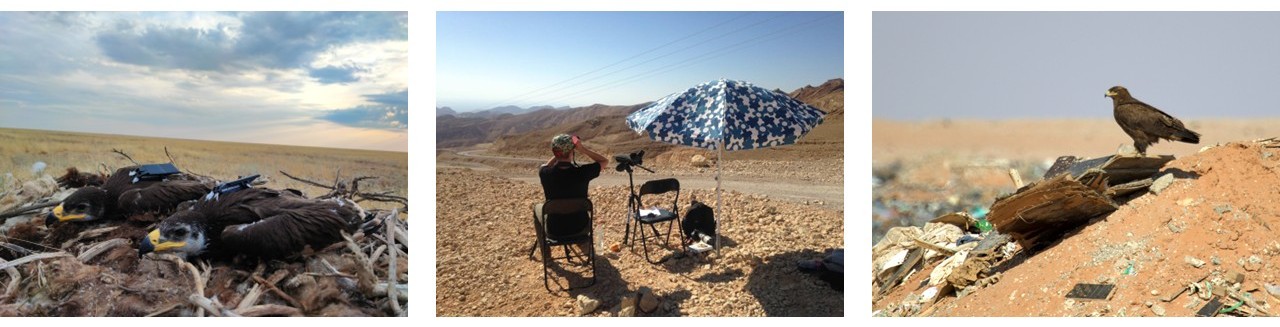
The vision of this plan is to Halt and reverse the decline of the steppe eagle by delivering innovative actions in science-based conservation and community engagement across its whole range.
Key threats facing the steppe eagle are present in all regions, but the level of impact varies geographically. These threats are:
• Energy Infrastructure: electrocution and collision with unsafe powerlines and windfarms are major causes of mortality and considered a primary driver of the decline.
• Illegal Killing, Take & Trade (IKB): hunting, trapping, and trade (including online markets) persist across the range, particularly in the Middle East, North Africa and Southeast Asia.
• Poisoning & Contaminants: exposure to pesticides and other toxic contaminants such as Non Steroidal Anti-Inflammatory Drugs (NSAIDs), heavy metals, and unsafe carcass disposal threatens survival.
• Habitat Loss & Environmental Change: changing prey populations, land use change, and climate-driven shifts are reducing breeding success.
Six strategic goals have been developed to tackle each of the key threats, in addition to addressing knowledge gaps, to inform conservation action across the species’ global range and to ensure the support and effective implementation of the plan:
- Reduce the impact of energy infrastructure on steppe eagles along the flyway
- Reduce significantly mortality due to impact of legal and illegal take and trade
- Understand and reduce the impact of unintentional poisoning on steppe eagle populations
- Attain good quality habitats that support populations of steppe eagle across the species’ range
- Address key knowledge gaps on steppe eagle distribution, movement, and threats through increased collaboration and coordinated research, to inform conservation action across their global range
- Ensure endorsement and effective implementation of the steppe eagle GAP across all range states through outreach with key communities and all major stakeholders
These goals underpin the 49 actions necessary to tackle the main threats to the species through science-based interventions targeting key parts of the species’ life cycle or spatial hotspots, with long-term research, monitoring and engagement enabling this process.
The conservation action framework is prioritised to reflect the relative urgency of each action, with expected timescales, key stakeholders and dependencies detailed. This plan provides the framework for coordinated global action to ensure the survival of one of the most iconic raptors of the Central Asian and East African-Eurasian Flyways.
Resources
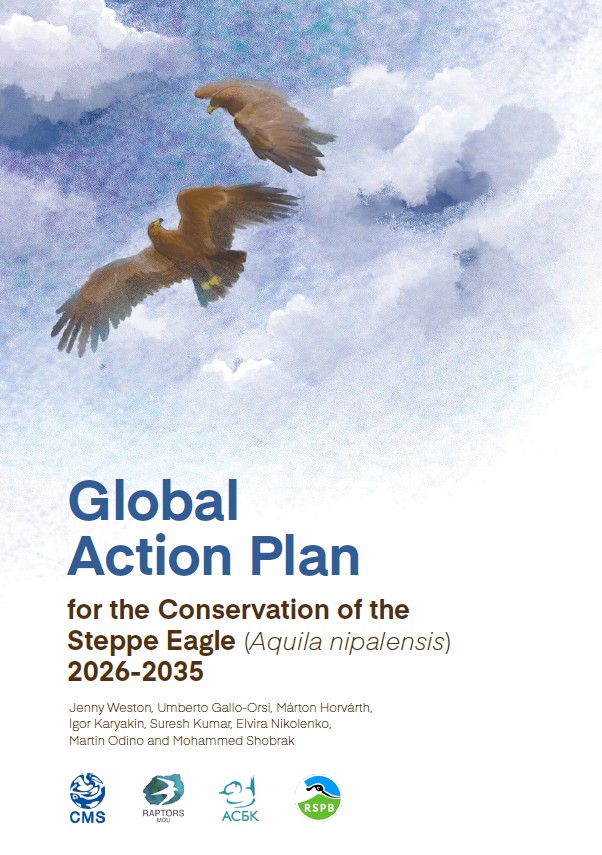
Weston, J., Gallo-Orsi, U., Horváth, M., Karyakin, I., Kumar, S., Nikolenko, E., Odino, M. and Shobrak, M. 2025. Global Action Plan for the Conservation of the Steppe Eagle (Aquila nipalensis) (2026-2035). RSPB, Raptors MOU Technical Publication No. 11, Abu Dhabi, 52pp. The document is available in English, Kazakh, Russian and Arabic.
Summaries in English, Kazakh, Russian and Arabic
Fact sheet on the steppe eagle (in English)
Events
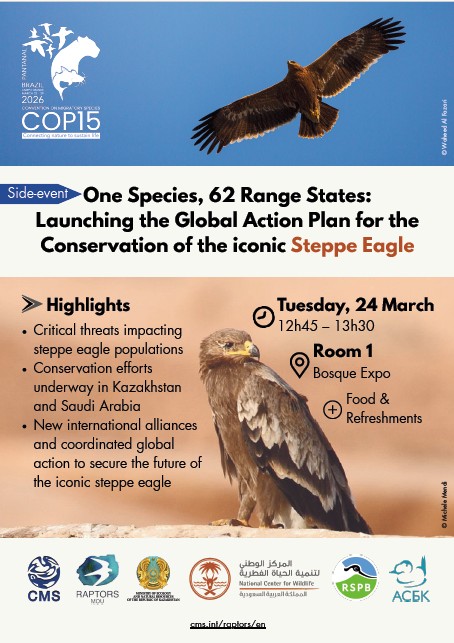
One species, 62 Range States: Launching the Global Action Plan for the Conservation of the iconic Steppe Eagle
The side event took place during CMS COP15 in Campo Grande, Brazil, on 24 March 2026. It featured a presentation on the key threats facing the iconic, globally Endangered Steppe Eagle, listed on CMS Appendices I and II, across its extensive range spanning 62 countries and territories. The session also outlined the priority actions identified in the Global Action Plan to address these challenges. The event provided an opportunity for key range states, including Kazakhstan and Saudi Arabia, to showcase their ongoing conservation efforts and announce new commitments towards implementation of the Plan. Discussions further highlighted how these initiatives align with broader migratory bird conservation frameworks, such as the Central Asian Flyway Initiative, underscoring clear opportunities for enhanced synergy and coordinated action among CMS Parties.
The event's invitation and presentations are available below:
Event invitation
Presentations - SEGAP side event CMS COP15