From Progress to Priorities: Celebrating Achievements in Vulture Conservation on Vulture Awareness Day
Vultures perform one of nature’s most valuable services. By rapidly removing animal carcasses from the landscape, they help limit the spread of disease, recycle nutrients and reduce the environmental and economic costs of carcass disposal. A first published assessment estimated the value of the ecosystem services provided by vultures in Botswana, Zambia and Zimbabwe alone at more than USD 250 million per year.
On 5 September 2026, conservationists, governments, scientists and local communities around the world will mark International Vulture Awareness Day, an annual opportunity to celebrate these remarkable birds and draw attention to the threats they continue to face.
Of the 15 migratory African-Eurasian vulture species, 11 are globally threatened and eight are classified as Critically Endangered on the IUCN Red List. Their populations face pressures from poisoning, electrocution and collision with energy infrastructure, habitat degradation, food scarcity and illegal killing. Poisoning, whether intentional or unintentional, remains the leading cause of mortality for many species.
Because migratory vultures cross national borders, protecting them requires countries to work together across their entire ranges. The CMS Raptors MOU supports implementation of the Multi-species Action Plan to Conserve African-Eurasian Vultures (Vulture MsAP), the international conservation framework adopted under CMS for all 15 species.
The Raptors MOU also helps translate the Vulture MsAP into regional action. The West African Vulture Conservation Action Plan (2023–2043), formally adopted by the CMS Standing Committee in March 2025, and the SADC Vulture Conservation Strategy and Action Plan (2025–2035), launched in August 2025, provide frameworks for governments and partners to address shared threats and coordinate conservation across borders.
Progress worth celebrating
Nearly nine years after the Vulture MsAP was adopted, experience across its vast geographic range points to an important lesson: where coordination and funding are in place, sustained conservation action can deliver measurable results.
This International Vulture Awareness Day, the Raptors MOU highlights some of the progress achieved in recent years.
Strengthening responses to poisoning and wildlife crime
Since 2017, more than 7,000 rangers, police officers and veterinarians from 24 African countries have been trained to prevent and respond to wildlife poisoning. In Europe, the Wildlife Crime Academy has trained more than 1,100 enforcement agents, toxicologists and veterinarians in wildlife crime forensics, while national working groups, road maps and investigation protocols are now in place across the Balkans.
In Guinea-Bissau, a landmark court ruling delivered Africa’s first prison sentence for vulture poisoning, setting an important legal precedent. In November 2025, a joint mission to The Gambia also brought together government officers, rangers and international experts to strengthen the country’s capacity to prevent and respond to mass poisoning events.
Removing harmful veterinary drugs
Diclofenac, the veterinary drug responsible for the collapse of South Asian vulture populations, is now banned for veterinary use in Bangladesh, Cambodia, India, Iran, Nepal, Oman, Pakistan and the Socotra Archipelago. India and Bangladesh have also banned aceclofenac, ketoprofen and nimesulide from veterinary use, while research has confirmed meloxicam and tolfenamic acid as safe and effective alternatives.
A joint WOAH–CMS fact sheet is helping veterinary authorities understand and address the risks that non-steroidal anti-inflammatory drugs can pose to vultures and other scavenging raptors.
Reducing exposure to lead
Zimbabwe has adopted the first national strategy dedicated to addressing lead poisoning in vultures, while a regional roadmap for phasing out lead ammunition in southern Africa is under consultation through SADC. The UK Government has adopted new restrictions for England, Scotland and Wales that will phase out lead shot and certain lead bullets, with limited exemptions.
Addressing belief-based use and illegal trade
Conservation programmes in Nigeria and Niger have reduced the number of stalls selling vulture parts by as much as 80–90 per cent in some key areas. The first southern African regional workshop on belief-based use, held in August 2025, brought together representatives of 12 governments, NGOs and traditional healer associations to develop shared solutions.
At the international level, the White-backed Vulture and Rüppell’s Vulture were transferred to CITES Appendix I at CITES CoP20, providing the Convention’s highest level of protection and generally prohibiting international commercial trade in the two Critically Endangered species.
Supporting vulture populations in Europe
With co-funding from the EU LIFE programme, the Bearded Vulture has been successfully reintroduced in southern France and is being re-established in Bulgaria. The Griffon Vulture has been saved from extinction in Cyprus, while its population in Sardinia has doubled. The Egyptian Vulture has also returned naturally to Sardinia.
In Portugal, the Cinereous Vulture population has trebled, leading to its reclassification from Critically Endangered to Endangered on the national red list. Flyway-level action has stabilized the easternmost European population of the Egyptian Vulture, which was classified as Vulnerable in the 2021 European assessment. The Egyptian Vulture New LIFE project also received the LIFE Citizens’ Prize at the LIFE Awards 2026.
Making skies safer in the Middle East
In Jordan and Saudi Arabia, high-risk sections of power lines have been insulated and agreements established with electricity companies. A shutdown-on-demand protocol is now applied at wind energy facilities in Jordan, allowing turbines to be stopped when birds are at risk. Vulture feeding stations providing safe food have also been established in Saudi Arabia and Oman, while breeding colonies continue to be monitored in protected areas across the region.
Building stronger national frameworks
Croatia has adopted a National Action Plan for the Griffon Vulture based on the Vulture MsAP, while Zimbabwe has updated its national vulture action plan for 2025–2035.
GPS tracking has also become standard practice in many Range States, with hundreds of vultures being followed at any one time. The information they provide is helping conservationists identify poisoning incidents, dangerous infrastructure and other risks, and target conservation measures more effectively.
Looking ahead
These achievements are significant, but progress remains uneven. Regions with dedicated coordination and funding have advanced furthest, while much of Africa, the Middle East and Central Asia still lacks the resources needed to implement the Vulture MsAP fully.

Vulture conservation will therefore feature prominently at the Fourth Meeting of Signatories to the Raptors MOU (MOS4), taking place from 30 November to 2 December 2026 in Victoria Falls, Zimbabwe. Representatives of the MOU’s 66 Signatories and five Cooperating Partners, together with observers from intergovernmental organizations, non-signatory Range States, NGOs and the private sector, will review progress, consider the findings of the Vulture MsAP Mid-term Implementation Review and determine the resources and regional coordination needed for the years ahead.
International Vulture Awareness Day is an opportunity to celebrate both the invaluable contribution vultures make to healthy ecosystems and the people working to protect them. The progress achieved so far shows that coordinated action can make a difference. Sustaining and extending that progress across the vultures’ full ranges is now the challenge ahead.
Egyptian Vulture
Egyptian VultureRed-headed Vulture
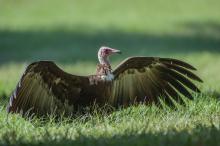
Red-headed VultureLappet-faced Vulture
Lappet-faced VultureCinereous Vulture
Cinereous VultureBearded Vulture
Bearded VultureWhite-backed Vulture
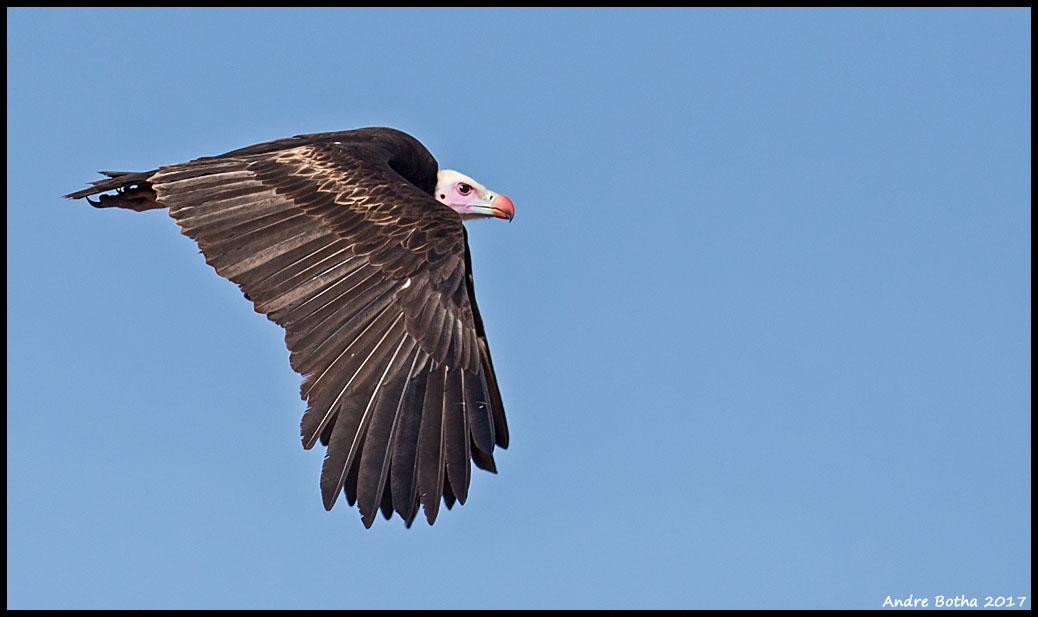
White-backed VultureWhite-rumped Vulture
White-rumped VultureCape Vulture
Cape VultureGriffon Vulture
Griffon VultureIndian Vulture, Long-billed Vulture
Indian Vulture, Long-billed VultureRüppell's Vulture, Rüppell's Griffon
Rüppell's Vulture, Rüppell's GriffonSlender-billed Vulture
Slender-billed Vulture