Conserving Raptors Across Regions: Action Plans for Falcons and Vultures.
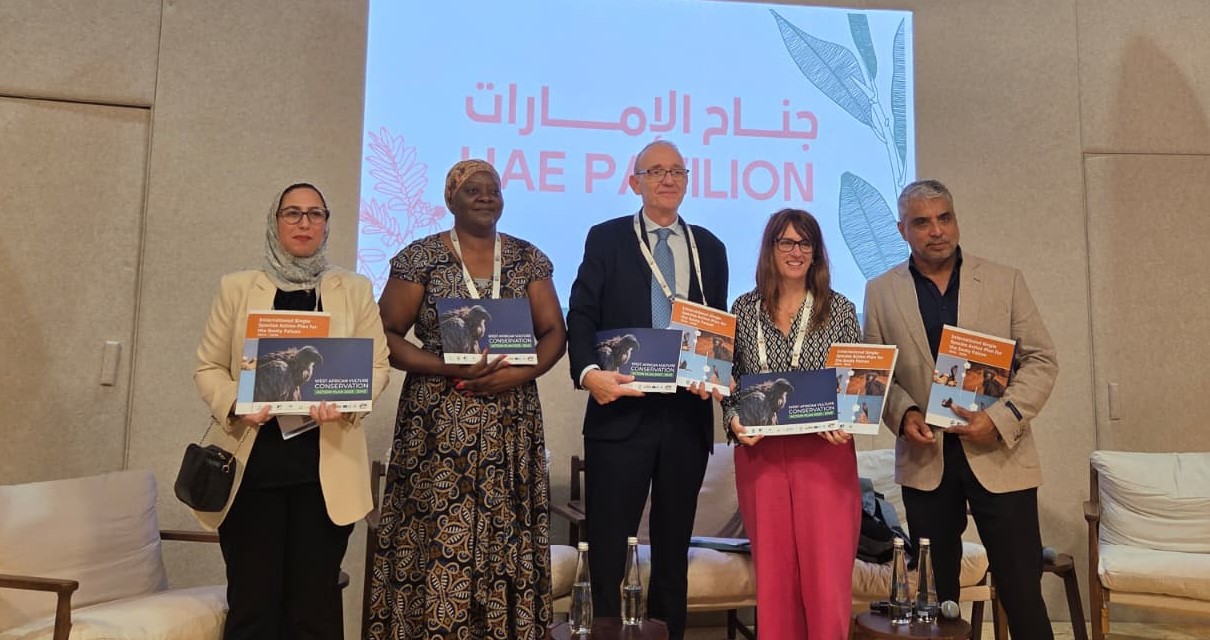
A high-level panel convened at the IUCN World Conservation Congress 2025 in Abu Dhabi to advance coordinated efforts for the conservation of raptors, focusing on falcons and vultures. The session marked the introduction of the West African Vulture Conservation Action Plan (WAVCAP) and the Vulture Multi-species Action Plan (Vulture MsAP): two landmark initiatives under the Convention on the Conservation of Migratory Species of Wild Animals (CMS).
The panel featured distinguished conservation experts: Dr. Amy Fraenkel, Executive Secretary of the CMS; Ms. Ndapanda Kamine, Senior Programme Officer for Natural Resources and Wildlife at the Southern African Development Community (SADC) Secretariat; Dr. Shaimaa Taha, Chief Technical Officer and General Manager of the Nature Conservation Sector at the Egyptian Environmental Affairs Agency, Ministry of Environment; Dr. Munir Virani, Chief Operating Officer of the Mohamed Bin Zayed Raptor Conservation Fund and; Dr. Lesley Dickie, Executive Vice President for Conservation and the Regions at BirdLife International. The discussion was moderated by Dr. Umberto Gallo-Orsi, Head of the Raptors MOU, CMS.
Raptors embody the health of ecosystems, as top predators, their presence reflects ecological balance and the effectiveness of conservation efforts. However, their populations are declining across Africa and Eurasia. Currently, 34% of migratory raptor species in this region are listed as Threatened or Near Threatened on the IUCN Red List, a decline driven primarily by poisoning, both intentional and accidental, as well as habitat loss and direct persecution.
Dr. Amy Fraenkel, drew attention to the importance of collaborative conservation frameworks, highlighting that “one country alone cannot safeguard the migratory birds of prey. Effective action planning and cross-border cooperation are required to secure the future of these species.”
The Vulture Multi-species Action Plan (Vulture MsAP), adopted at CMS COP12 in 2017, lays the foundation for coordinated conservation across 128 Range States covering all 15 African-Eurasian migratory vulture species. Building on this, the newly launched West African Vulture Conservation Action Plan (WAVCAP) provides a 20-year framework (2023–2043) to address regional threats, particularly belief-based use and poisoning. This regional approach aims to further engage government and strengthen cooperation with NGOs and stakeholders such as the traditional healers.
Dr. Gallo-Orsi acknowledged the power of collective action, stating that, “By bringing together all stakeholders in the development and implementations of these plans, we can ensure the conservation and protection of threatened raptors globally.”
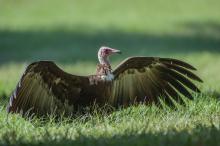
West Africa remains a hotspot for vulture mortality, with mass poisoning events, such as the 2020 incident in Guinea-Bissau that killed over 2,000 Critically Endangered Hooded Vultures, underscoring the urgency of action. The WAVCAP envisions that by 2043, vulture populations across 16 West African countries will be sustainable, legally protected, and coexisting harmoniously with people in healthy ecosystems.
Ms. Ndapanda Kamine presented the SADC Southern Africa Vulture Conservations Strategy and Action Plan, also a regionally focused plan “that defines the critical actions needed to save vultures in Southern Africa. The coordinated implementation of SADC plan, supported by governments, partners, and communities, can truly turn the tide for African vultures.”
The session also introduced the International Single Species Action Plan for the Sooty Falcon (ISSAP) 2024–2036, presented by Dr. Taha. The 12-year plan aims to reduce the risk of extinction of the Sooty Falcon by stabilising and increasing its populations through three key objectives: (1) protecting the species and its breeding sites; (2) improving knowledge through research and monitoring; and (3) promoting awareness and knowledge exchange across Range States. This plan triggered the development of the Egyptian National Plan and research work in many countries.
Dr. Shaimaa Taha presented the National Egyptian Plan to conserve the Sooty Falcon, which coordinates the work of the national governments, law enforcement agencies, protected areas authorities and conservationists to protect the largest national populations of the species.
As Dr. Virani described their research work on Vultures an sooty falcon and pointed out that, “The future of vultures, sooty falcons and indeed any migratory threatened bird, and the health of the ecosystems they sustain, depends on our ability to work together across borders and sectors.”
Dr. Lesley Dickie highlighted the importance of partnerships: “Collaborations, alliances, and commitment to monitor results and learn from them, are the cornerstone of effective conservation. Through joint efforts, we can ensure safe skies for raptors and a healthier planet for all.”
Together, these new international, regional and national action plans reaffirm the commitment of the global conservation community to protect raptors and ensure that these iconic species continue to soar across the skies of Africa, Eurasia, and beyond.
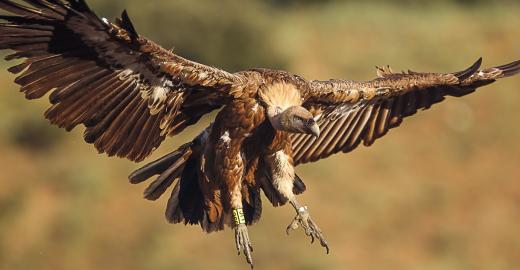
Indian Vulture, Long-billed Vulture
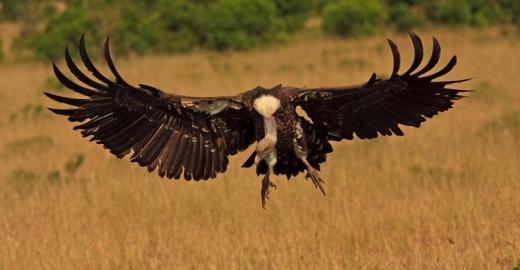
Indian Vulture, Long-billed VultureRüppell's Vulture, Rüppell's Griffon
Rüppell's Vulture, Rüppell's GriffonSlender-billed Vulture
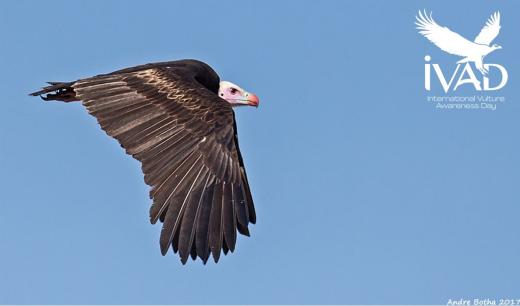
Slender-billed Vulture