Landmark Seminar in Bishkek to Protect Central Asia's Birds of Prey
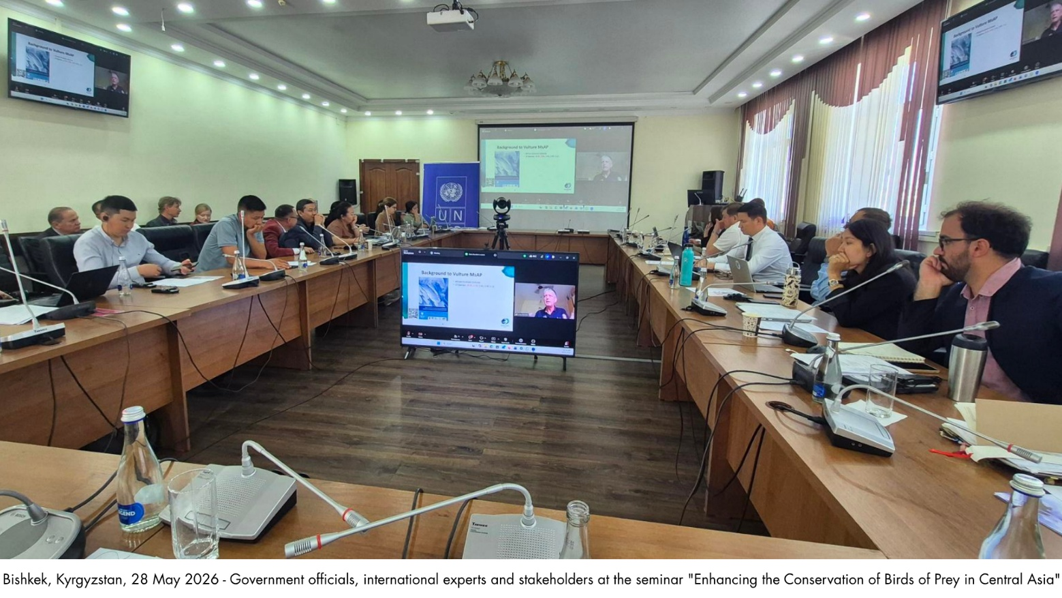
On 28 May 2026, Kyrgyzstan hosted a regional seminar in Bishkek titled "Enhancing the Conservation of Birds of Prey in Central Asia." The event brought together online and in person, eighty government officials, international experts, and conservation organizations to strengthen cooperation on protecting migratory birds of prey across Central Asia.
The seminar, organized jointly by the Ministry of Natural Resources, Ecology and Technical Supervision of the Kyrgyz Republic, the Raptors MOU Coordinating Unit, UNDP Kyrgyzstan, Friedrich Ebert Stiftung Central Asia, and the local conservation NGO “Nature Foundation”, built on an important regional commitment made in February 2024, when Kyrgyzstan, Kazakhstan, and Uzbekistan signed the CMS Raptors Memorandum of Understanding (MOU). The agreement provides a framework for countries to work together to conserve birds of prey and reverse population declines. This effort is particularly urgent, as approximately one-third of migratory raptor species across the Africa–Eurasia region are currently classified as globally threatened or Near Threatened.
Challenges Facing Raptors in Kyrgyzstan
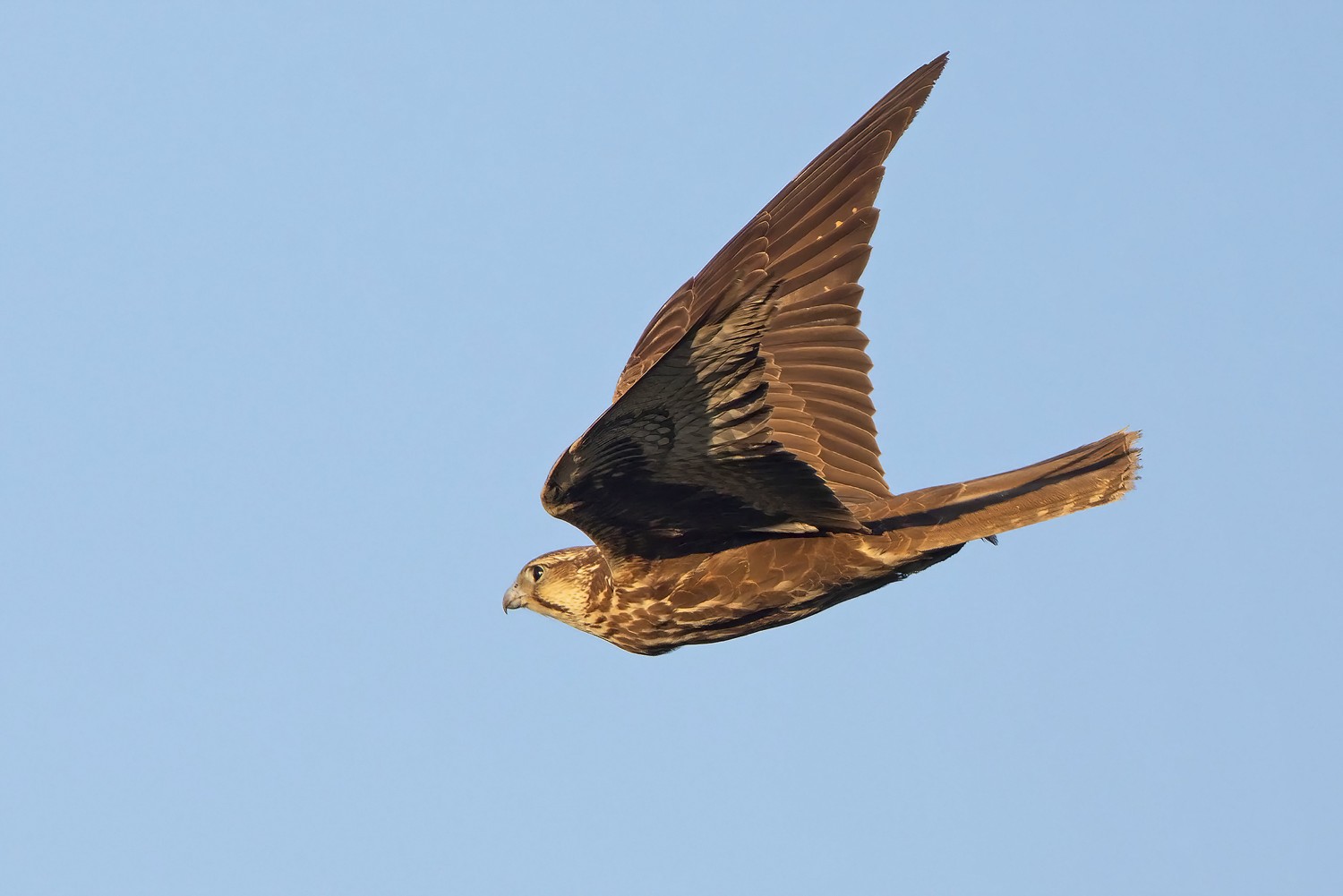
Central Asia serves as a vital migration corridor for many birds of prey, yet significant gaps remain in understanding the size and status of raptor populations in the region. Kyrgyzstan alone hosts or lies along the migration routes of eleven high-priority raptor species, including the saker falcon, Egyptian vulture, and steppe eagle. Participants identified three major human-related threats affecting these species:
Electrocution and collisions with infrastructure: Many birds are injured or killed when they collide with power lines or land on electricity poles that are not designed to be bird-safe.
Poisoning and harmful veterinary drugs: Certain livestock medicines, particularly some NSAIDs, can be fatal to vultures and eagles that feed on carcasses. Accidental and deliberate poisoning also remains a serious concern.
Illegal capture and trade: Unsustainable trapping and illegal trade, especially for falconry, continue to threaten species such as the saker falcon.
Priorities for Future Conservation Action
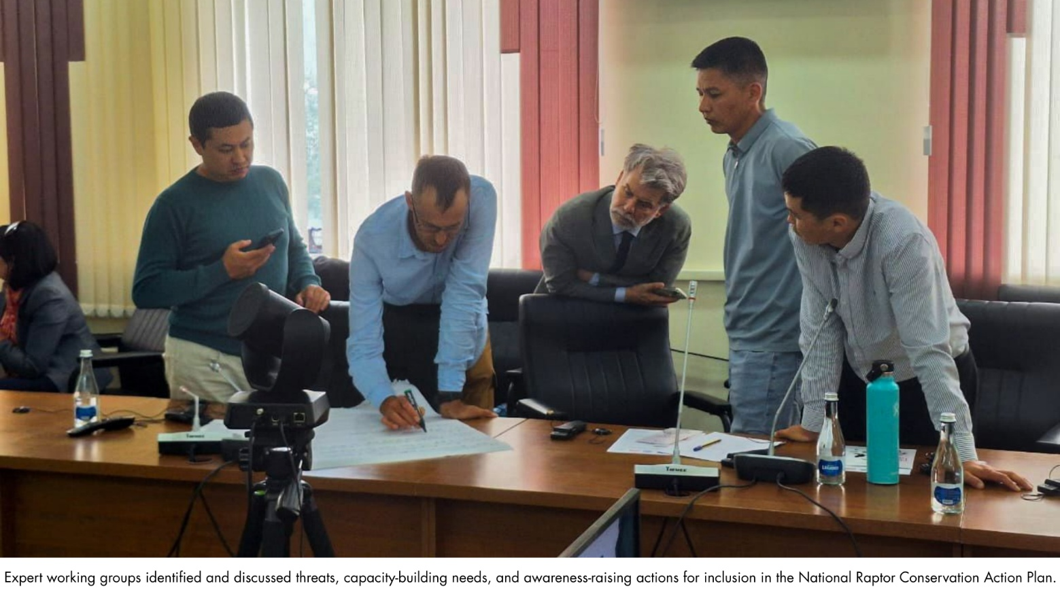
The seminar outlined three key areas where action is needed to improve raptor conservation in Kyrgyzstan through the development and implementation of a National Raptor Conservation Strategy as a contribution to Kyrgyzstan’s National Biodiversity Strategy and Action Plan (NBSAP).
Improving Monitoring and Research
Experts emphasized that conservation efforts depend on reliable data. Important migration routes, stopover sites, and wintering areas remain poorly understood. Establishing a national monitoring system with standardized methods would help scientists track populations more effectively and share information with neighboring countries along migratory flyways.
Reducing Key Threats
The seminar called for integrating bird conservation into national planning and infrastructure development. Recommended measures include adopting bird-friendly standards for new power lines and upgrading existing infrastructure in areas where bird deaths are most common. Several priority conservation sites have already been identified in Kyrgyzstan, including Western Issyk-Kul Lake, Son-Kul Lake, and the Tash-Rabat Gorge.
Strengthening Expertise and Coordination
Participants highlighted the need for more specialized training for wildlife veterinarians, toxicology experts, and investigators tackling wildlife crime. Stronger coordination between environmental authorities, energy companies, customs agencies, and law-enforcement bodies was also identified as essential for effective conservation.
A Unified Regional Effort
The seminar's outcomes support both Kyrgyzstan’s NBSAP and international conservation initiatives such as the Action Plans for vultures, saker falcon and steppe eagle. More importantly, the discussions underscored that protecting migratory birds of prey cannot be achieved by any country acting alone. Because these species cross national borders throughout their annual migrations, effective conservation requires coordinated action across the entire Central Asian Flyway.
By improving scientific monitoring, reducing human-caused threats, and strengthening cooperation among governments, conservation organizations, and local communities, Central Asian countries have an opportunity to help safeguard critical migration routes for some of the region’s most iconic bird species. These efforts also contribute to Target 3 of the Kunming-Montreal Global Biodiversity Framework, which aims to effectively conserve and manage at least 30 percent of the world's land, inland waters, coastal areas, and oceans by 2030. The Bishkek seminar represents an important step towards building a shared regional vision for biodiversity conservation and translating international commitments into practical action on the ground.