
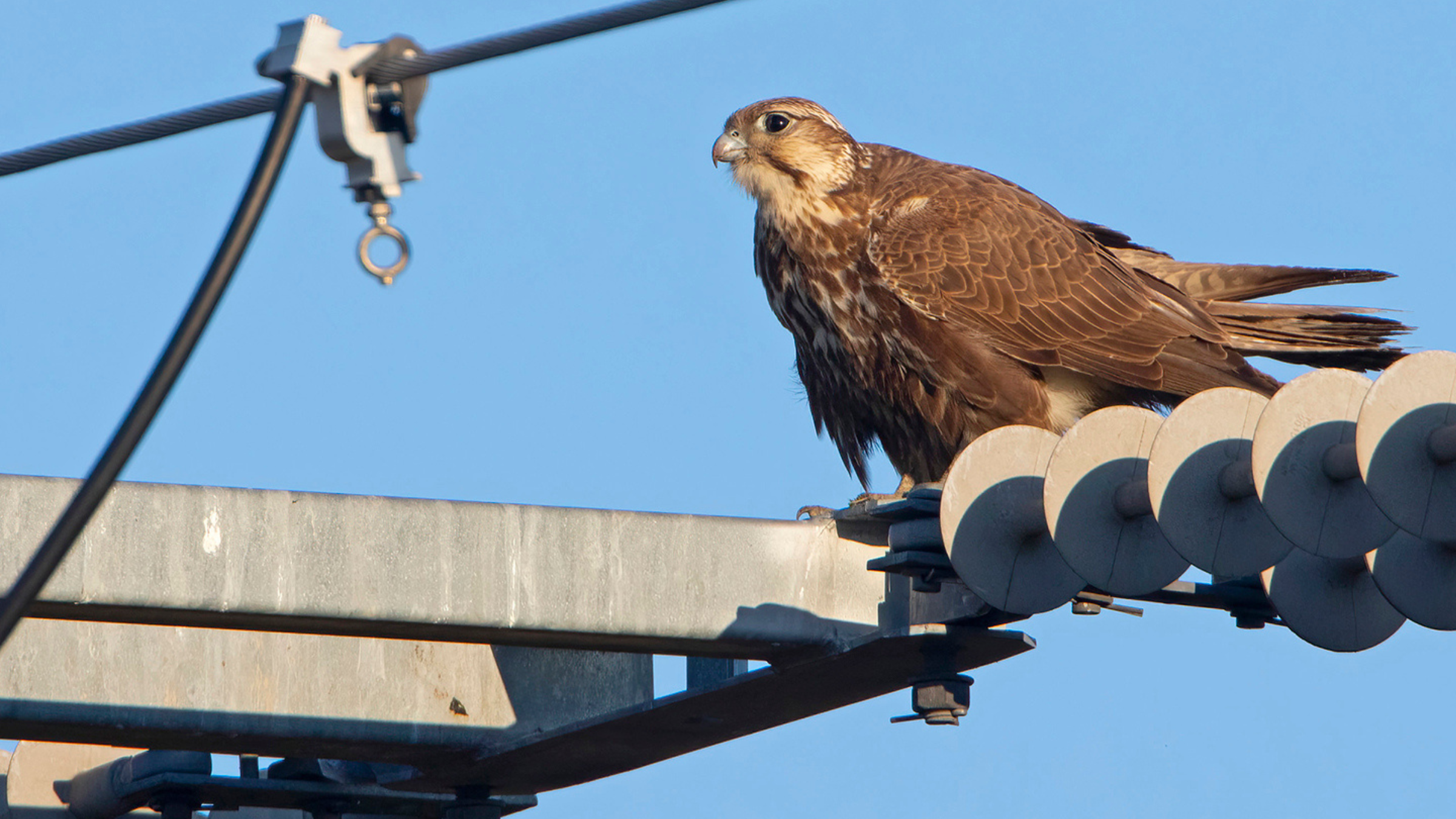
One Bird Every Three Seconds: Insights from the IFC Webinar on Preventing Bird Electrocution
On 11 June 2026, The CMS Secretariat and the Coordinating Unit of the CMS Raptors MOU , participated in the International Finance Corporation's Sustainability Webinar Preventing Bird Electrocution on Distribution Lines: From Risk to Good Practice. The webinar brought together experts to examine the scale of bird electrocution on power distribution lines, showcase proven mitigation measures, and discuss how bird-safe practices can be integrated into power infrastructure planning. This issue is particularly relevant to the Raptors MOU, as bird electrocution is a major threat to many of the 94 species covered by the agreement. Addressing this threat is a conservation priority that requires coordinated international action, including the implementation of species-specific initiatives such as the Global Action Plan for the Conservation of the Steppe Eagle (2026–2035).
The webinar launched the IFC Tip Sheet, Preventing Electrocution Risks for Birds on Distribution Lines, which provides practical guidance on designing, retrofitting, and operating bird-safe distribution networks. As electricity grids continue to expand and modernize globally, applying this guidance will be increasingly important to reduce risks for birds while improving the reliability of electricity networks.
One bird every three seconds
Mortality analysis of satellite-tracked large birds across Africa and Eurasia shows that electrocution accounts for 40.5% of all human-induced mortalities, making it the leading documented cause ahead of illegal killing (21.7%) and poisoning (16.3%). Powerline electrocution is among the most significant threats to migratory raptors and represents a major infrastructure challenge with significant biodiversity impacts. With distribution lines typically remaining in service for more than 40 years, unsafe designs can continue causing wildlife mortality for decades. It has been estimated that ten million birds are electrocuted each year, or about one bird every three seconds. With millions of kilometres of new and refurbished distribution lines expected over the coming decades, incorporating bird-safe design principles from the outset will be essential to avoid creating new electrocution risks.
Addressing this challenge effectively requires prioritizing action where risks are greatest. Resources developed under the Raptors MOU, including threat maps published as part of the Vulture Multi-species Action Plan (MsAP) and the network of more than 7,000 Internationally Important Raptor Areas (IIRAs) recognized by CMS Parties at COP15, can help identify these priority areas. Together with spatial planning tools such as AviStep, these resources can help governments, utilities, and financiers integrate biodiversity considerations into infrastructure planning.
Retrofitting existing infrastructure alone will not be sufficient. As electricity demand and renewable energy development continue to expand, new powerlines must be designed to avoid high-risk habitats wherever possible. Retrofitting hazardous poles must therefore go hand in hand with proper siting of new lines and bird-safe pylon and pole designs that eliminate electrocution risks before infrastructure is built. This will require stronger legislation, harmonized standards among international financial institutions, and closer collaboration between the energy and conservation sectors.
Not (only) a biodiversity issue
Bird electrocution should be understood not only as a biodiversity issue but also as a widespread operational challenge for electric utilities and distribution network operators, with animal electrocutions estimated to account for around 10% of micro-interruptions on distribution networks, damaging equipment and reducing service quality. Preventing electrocution therefore delivers both operational and financial benefits alongside wildlife conservation.
Ultimately, the webinar demonstrated that protecting birds and improving energy infrastructure go hand in hand. Retrofitting power infrastructure not only reduces wildlife mortality but also improves grid reliability, lowers operational costs, limits liability, and delivers better service to customers. Combined with bird-safe planning, siting, and design, these measures can prevent new electrocution hotspots as power networks expand. Building partnerships between conservation organizations, development finance institutions, utilities, and the wider energy sector will be essential to accelerating the transition to bird-safe power infrastructure.