Zimbabwe Signs Raptors MoU, Strengthening Global Raptor Conservation
Harare, 23 May 2025 - Zimbabwe has become the 66th country to sign the Memorandum of Understanding on the Conservation of Migratory Birds of Prey in Africa and Eurasia (Raptors MoU), bolstering international efforts to safeguard species of eagles, vultures, falcons and other raptors along their vast flyways.
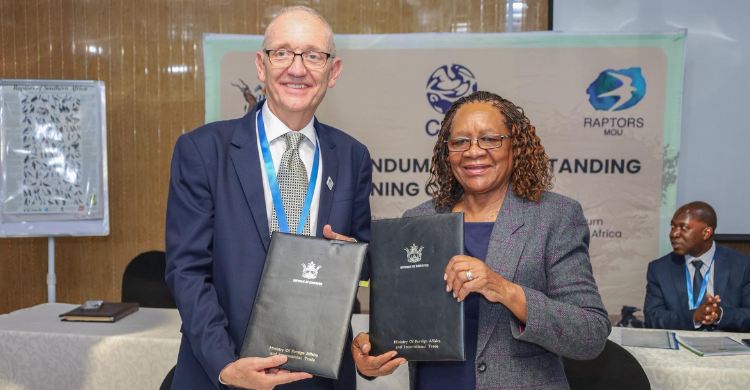
The signing ceremony was held on 22 May 2025 at the Harare International Conference Centre (HICC) during the SADC Trans-Frontier Conservation Areas (TFCA) Conference and Summit. Minister of Environment, Climate and Wildlife, Dr Evelyn Ndlovu, signed on behalf of Zimbabwe, while Umberto Gallo-Orsi represented the Convention on Migratory Species (CMS) Secretariat, under which the Raptors MoU is hosted. Also in attendance were senior SADC officials, executives from the Zimbabwe Parks and Wildlife Management Authority (ZimParks), and the CMS National Focal Point.
"The signing of this MoU reinforces our conservation approach to managing shared animal populations characterised by harmonised strategies, regulations and other governance structures and processes," stated Dr Ndlovu. "Until now, Zimbabwe [had] not been a signatory of the Raptors MoU, hence could not fully participate in the decision making process affecting the conservation of Raptors. Countries including most Range States for Raptors meet as Meeting of the Signatories to the MoU but Zimbabwe only attended as an observer. This practice of merely attending as an observer ends today as Zimbabwe has finally acceded to the MoU. Zimbabwe is now better placed to engage in coordinated international initiatives to conserve the raptors in the country," she added.
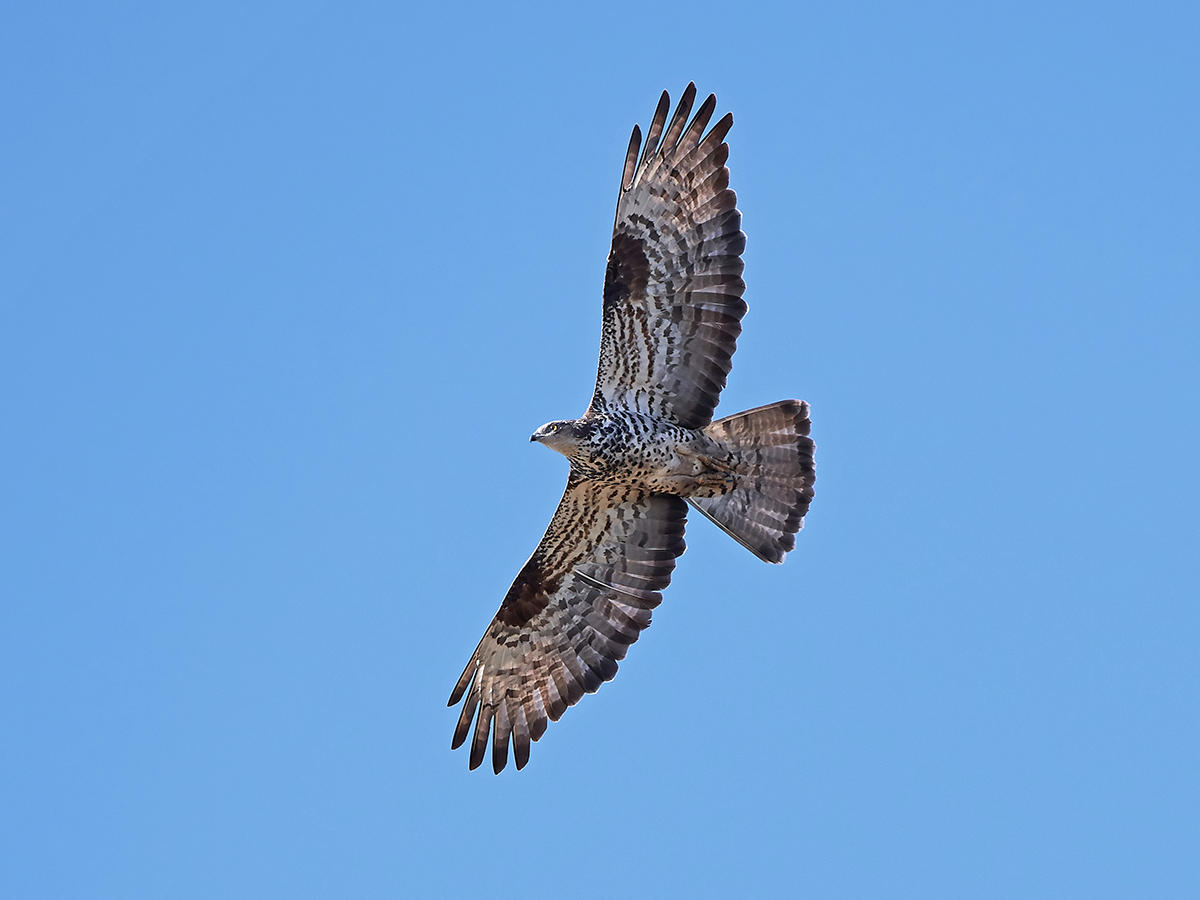
European honey buzzard © Dennis Jacobsen/Dreamstime.com
"Zimbabwe’s accession is especially symbolic. A raptor is proudly displayed on the national flag — a powerful representation of the cultural and ecological value [the] nation places on birds of prey," said Gallo-Orsi. "Zimbabwe is home to 37 of the 94 species covered under the Raptors MoU, underscoring [its] critical role in conserving migratory raptors, particularly vultures, in Southern Africa and beyond. Moreover, three sites in Zimbabwe have already been identified as internationally important for migratory birds of prey. In line with the MoU, we are confident that more will follow, strengthening a network of protected habitats across the continent," he continued.
The event coincided with Zimbabwe’s celebration of the International Day for Biological Diversity, whose 2025 theme “Harmony with Nature and Sustainable Development” echoes the MoU’s goals of balancing human development with ecosystem health.
Why the Raptors MoU Matters
Migratory raptors traverse thousands of kilometres each year, soaring over borders and continents. Along the way they face escalating threats — habitat loss, electrocution on power lines, collisions with wind turbines, illegal shooting and poisoning. Coordinated action is essential because birds that winter in southern Africa often breed in Europe or Central Asia; a setback in any one country can ripple across entire populations.
Under the MoU, signatories pledge to:
- Monitor populations and share data on trends and threats.
- Protect critical habitats including breeding cliffs, roosts and migratory bottlenecks.
- Phase out hazardous practices, from certain pesticides to poorly designed energy infrastructure.
- Raise public awareness of raptors’ ecological role as scavengers and natural pest controllers.
Next Steps
Zimbabwean authorities, working with CMS and regional partners, will now draft a national raptor action plan, update wildlife legislation to cover emerging threats, and explore funding for community-based monitoring schemes.
With raptors widely regarded as sentinels of ecosystem health, Zimbabwe’s accession sends a clear signal: protecting birds of prey is not only an ethical imperative but also a practical investment in healthy, resilient landscapes for people and nature alike.