
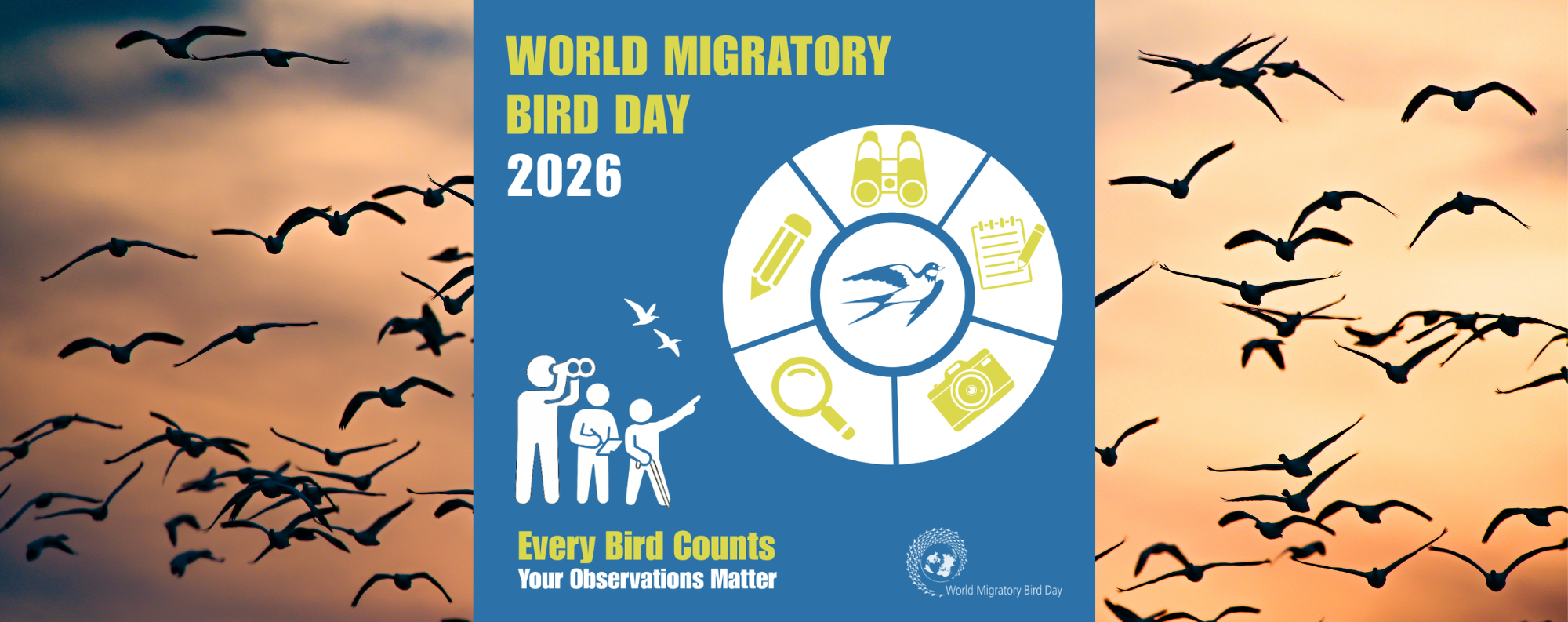
World Migratory Bird Day 2026: Every Bird Counts - Your Observations Matter
World Migratory Bird Day 2026 highlights the important role people everywhere can play in protecting migratory birds through observation, monitoring, and shared information. Celebrated each year in both May and October to reflect migration patterns in the northern and southern hemispheres, the campaign connects communities, organizations, researchers, and governments in a global conservation effort.
Migratory birds travel across countries, oceans, and continents, relying on healthy wetlands, forests, coastlines, grasslands, and urban spaces along their migration routes. Many migratory bird populations are declining because of habitat loss, pollution, climate change, building collisions, and other human-caused disturbances. Since migratory birds traverse vast distances and travel across international borders, scientists cannot monitor them alone.
Community science programs have become one of the most effective ways to understand how migratory birds are changing over time. From backyard birdwatchers to coordinated international surveys, people help collect information about bird populations, migration timing, breeding success, habitat conditions, and environmental threats. This information supports conservation planning, strengthens environmental policy, and helps organizations respond more quickly to conservation challenges.
Across the world, community science programs now play an increasingly important role in international conservation efforts by helping collect information at a scale that would otherwise be impossible. In 2026, the World Migratory Bird Day campaign will also connect with a major international shorebird count and other global monitoring efforts that involve volunteers across flyways and regions. These initiatives demonstrate how local observations can contribute directly to global conservation action.
BIRD CONSERVATION THROUGH SHARED KNOWLEDGE AND OBSERVATION
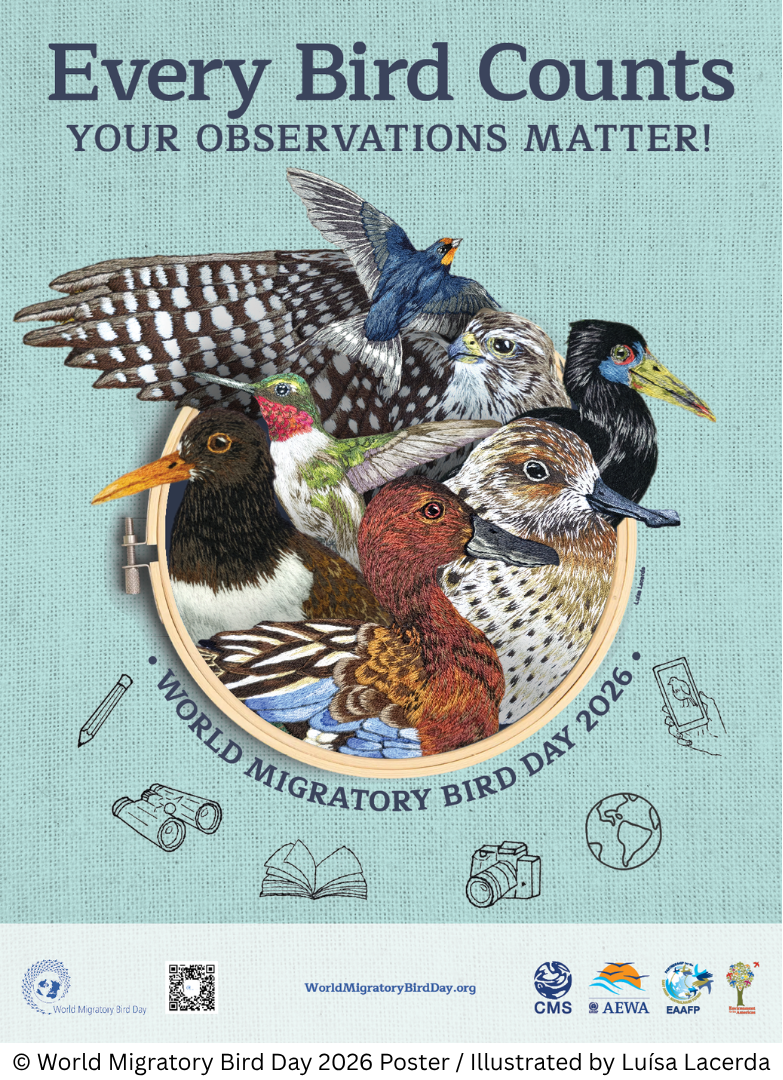
Community science makes bird conservation possible by enabling people everywhere to contribute observations across wide geographic areas and over long periods of time. Whether documenting birds in cities, wetlands, forests, farms, or coastal habitats, every observation helps improve understanding of biodiversity and environmental change.
By contributing information about birds, habitats, migration timing, nesting activity, pollution, and other environmental conditions, community scientists help identify populations most vulnerable to habitat loss, climate change, collisions, and other threats. These observations provide essential evidence for conservation planning, habitat management, and protective policies.
Long-term community science efforts are especially valuable because years of consistent observations can reveal gradual population declines and shifting migration patterns that short-term studies often miss. This long-term information strengthens scientific understanding, improves conservation planning, and helps organizations respond more effectively to emerging environmental challenges.
Community science also accelerates scientific discovery by enabling researchers to detect patterns and respond more quickly to conservation concerns through large networks of participants sharing information in real time. Open participation allows people of all ages, backgrounds, and experience levels to contribute meaningfully to science while strengthening their connection with nature.
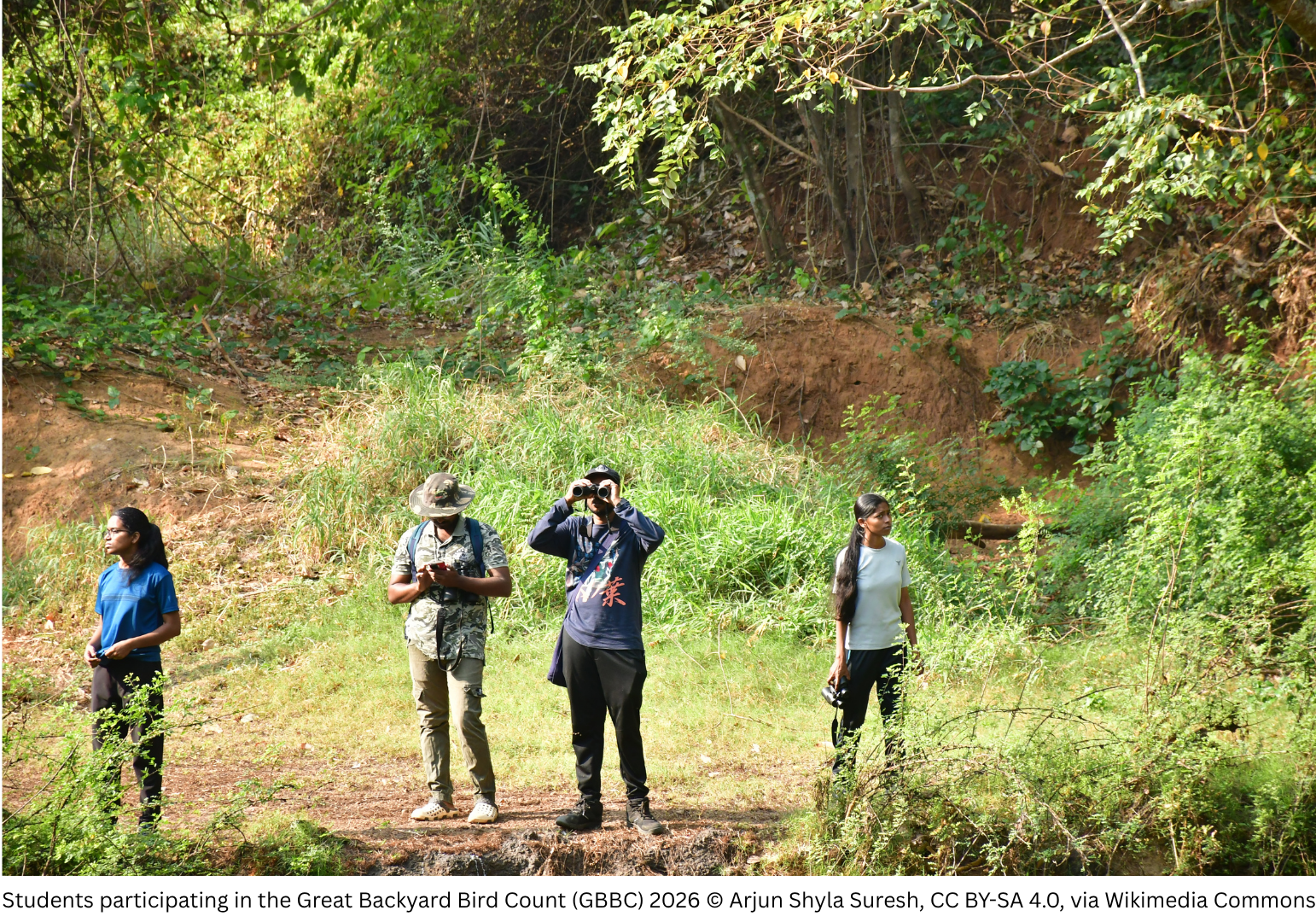
Because migratory birds cross continents and oceans, their conservation depends on cooperation among countries, cultures, and communities connected along shared flyways. Local actions such as creating bird-friendly spaces, protecting habitats, reducing pollution, and participating in monitoring programs can collectively produce significant conservation benefits for migratory species worldwide.
Digital tools and mobile applications such as eBird, iNaturalist, Observation.org, Ornitho, BirdTrack, and BirdLasser have made community science more accessible by helping people identify birds, record observations, and contribute data to international conservation initiatives. These tools not only support research but also encourage curiosity, learning, and a deeper appreciation for birds and the natural world.
High-quality observations and ethical birding practices remain essential because reliable information supports conservation decisions at local, national, and international levels. Observing birds responsibly by minimizing disturbance, respecting habitats, and following ethical guidelines helps protect wildlife while ensuring collected information remains useful for conservation and research.
WHAT CAN YOU DO?
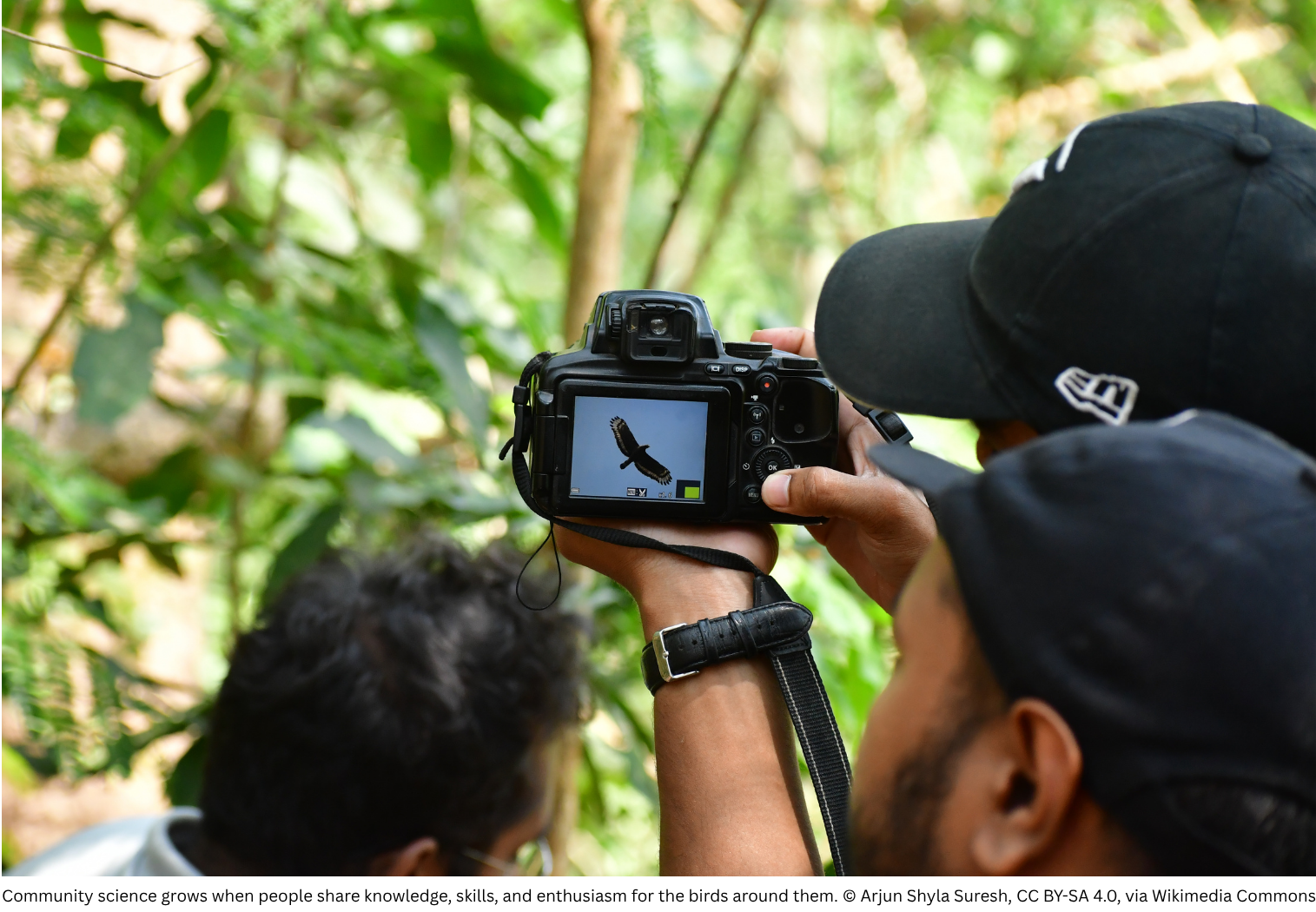
Observe and record the birds around your home, school, workplace, or local park, and share your observations through community science platforms and monitoring programs. Participate in bird counts, support local conservation organizations, volunteer with monitoring or banding projects, report sightings of marked birds, and encourage decision-makers to support science-based conservation policies. Learn about the birds in your community, share your knowledge with others, especially young people and new birdwatchers, and practice respectful birding by keeping a safe distance from wildlife and protecting natural habitats. Every observation contributes to a growing global effort to better understand and protect migratory birds for future generations.
FROM LOCAL ACTION TO GLOBAL CONSERVATION
Migratory birds connect countries, ecosystems, and people across the world, reminding us that conservation depends on cooperation beyond borders. Every observation shared through community science helps build a clearer understanding of the challenges birds face and the actions needed to protect them.
From local parks and coastlines to international flyways, people of all ages can contribute to a growing global effort that supports research, informs policy, and strengthens conservation action. By observing birds, sharing information, and encouraging others to participate, communities everywhere can help ensure that migratory birds continue their journeys for generations to come.